Article From & Read More ( DBS and CGS-CIMB see digital bank licence win as 'positive longer-term development' for Singtel - The Edge Singapore )
https://ift.tt/2K0nxS6
Business
SINGAPORE - The collapse of the ventilation duct in a Nex mall cinema was due to "a significant amount of water" accumulating in the insulation material surrounding the duct.
The investigation findings were released by the Building and Construction Authority in a statement on Monday (Dec 7), following the incident at a Shaw Theatres cinema hall on Aug 30 that left two moviegoers injured.
The water accumulation was a result of "unforeseen excessive condensation over a sustained period", and its weight had overloaded the air-conditioning and mechanical ventilation (ACMV) dropper duct.
The acoustic material surrounding the duct typically serves to regulate the surface temperature around the duct to prevent water from forming due to condensation, and to insulate the noise caused by air travelling through the duct.
Checks on other cinemas' ACMV systems and ducts had found no such excessive condensation, said BCA.
A spokesman for Nex said in a statement on Monday that it will “continue to support and work closely with (its) tenant, Shaw Theatres, throughout the course of rectifications for the planned reopening of their premises next year”.
It did not say if checks on other ACMV ducts in the building will be conducted.
Shaw Theatres had conducted inspections at its six cineplexes following the incident, and all were found to be safe.
Similarly, Golden Village cinemas said it had conducted an additional round of inspection and maintenance checks with BCA officers, after recommendations from the authority.
It also has an ongoing monthly maintenance schedule for all its cinemas to be inspected by professional ACMV contractors.
BCA said it will be issuing an advisory to the building owners and the industry on the importance of regular maintenance and to share good practices for the design and installation of ACMV systems.
Article From & Read More ( Ventilation duct at Nex mall fell due to accumulated water, says BCA after probe - The Straits Times )
https://ift.tt/2VLoUXx
Business
SINGAPORE - Singapore's Covid-19 cases in the community have been at an all-time low, with zero local cases for two weeks last month.
This has raised hopes that the Republic could see off the difficult year with a transition into phase three of its reopening, which would see more easing of restrictions including allowing for larger gatherings.
It has been more than five months since the country moved into phase two of its progressive reopening, following an eight-week circuit breaker from April 7.
Experts say the major stumbling block to phase three is the inadequate adoption of the TraceTogether app or token, which helps to facilitate more effective contact tracing.
So far, around 2.9 million people have downloaded the app or collected the token, the Smart Nation and Digital Government Office said. With a total population of 5.7 million, the uptake of TraceTogether is 50.8 per cent, a far cry from the 70 per cent target.
Associate Professor Alex Cook, vice-dean of research at the National University of Singapore's (NUS) Saw Swee Hock School of Public Health, said: "One of the targets set has been for sufficient numbers of people to have TraceTogether as more effective contact tracing will counter the relaxation in rules. I think we're not yet at that target, and that may hold us back from advancing a phase."
His colleague, Professor Teo Yik Ying, dean of the school, agrees, noting that adoption of TraceTogether is lagging.
He said: "At present, it appears we will not be moving to phase three by the end of the year as it appears that token distribution has not achieved a complete coverage of the entire population."
The tokens are being distributed one constituency at a time and are currently being given out at 37 community centres and clubs, including Aljunied CC and Bukit Batok CC.
However, in recent months, the TraceTogether programme has seen some teething issues including complaints about the app draining phone batteries, as well as a surge in demand for tokens, which meant that not everyone has been able to get hold of one.
Testing capacity
Since the start of the pandemic, rigorous testing regimens have been in place, including as part of community surveillance. These have helped to detect and isolate cases.
Whether a community case is linked or unlinked is also worth noting. Of the eight recent cases, at least five were unlinked while two belonged to the dorms.
But there is no need to be overly worried, Prof Cook said, as the two Tekka cases seem to be isolated, suggesting that infection control measures have been effective in halting transmission chains.
When asked why Tekka Market was chosen as a testing site, Prof Cook explained: "People working in customer-facing roles are more likely to interact with a case and thus to get infected themselves."
He also highlighted the ways which testing can be done: Proactively - such as the pre-school swabbing exercise to provide reassurance that it is safe to reopen pre-schools after the circuit breaker - and reactively, such as when those working in the public bus depots and interchanges were tested in response to a cluster that broke out at the Bukit Panjang Integrated Transport Hub in July.
Commuters at Bukit Batok Bus Interchange, on Sept 12, 2020. ST PHOTO: KELVIN CHNG
Professor Dale Fisher, senior consultant in the infectious diseases division at the National University Hospital, said Singapore's testing strategy is multi-faceted. It includes testing those with acute respiratory infection and close contacts, and routine testing of residents in high-risk dormitories and industries as well as front-line workers.
He said: "I believe continuing surveillance in places like hawker stalls is simply an extension of such efforts to look around for cases and at the same time reassure ourselves that there is no significant community spread going unrecognised."
With the outbreak well under control, Singapore has the opportunity to redirect that capacity to look for any unidentified problems, he added. "It's quite a luxury compared with the rest of the world."
Keeping to the rules
The public seems to have been generally complying with the rules around mask wearing, social distancing, and gatherings in groups of five, Prof Teo noted, an area that the country must score well in before the gates to phase three open.
However, some black sheep remain. For instance, on Nov 28, about 30 people across six tables in Tekka Centre were allegedly intermingling, according to a Lianhe Zaobao report.
This was one of four recent reported incidents of non-compliance.
The response to these infringements shows the Government is committed to taking action against those who don't keep to the rules, Prof Cook said.
Risks from abroad
With some countries experiencing new waves of Covid-19 infection, and the recent bursting of the Hong Kong travel bubble, questions have been raised if the regional and global situation will affect Singapore's phase three reopening.
If Singapore does not intend to further review its border control measures, then the global situation actually has very little bearing on Singapore, Prof Teo said.
"However, if we are actively making plans to ease further movements of business travellers and tourists in, then certainly we will be prudent to consider what is happening globally, especially amongst our key business and tourism partner countries."
Prof Cook said the global situation and resurgence of cases as countries open up provide various lessons on what can go wrong in the pandemic.
"I think we will want to avoid going into phase three and then reverting to a more stringent level of control if the cases pop back up, and the risk of a volte-face will be one of the things being considered."
Prof Teo cautioned that with additional restrictions eased in phase three, including allowing for larger gatherings, the risk of an uncontrolled and accelerated spread within the community will increase, as seen in places such as Hong Kong and South Korea.
Travellers arriving via flights from Malaysia and Taiwan receiving a Stay-at-Home Notice (SHN) smart watch issued by Ministry of Manpower after clearing immigrations at the Changi Airport Terminal 3 arrival hall on Sep 24, 2020. ST PHOTO: KEVIN LIM
Clusters have been sprouting rapidly in various parts of Seoul, including a call centre, gym and university, making it difficult for the authorities to stem the spread. Only about 15 per cent of cases reported in the past two weeks could be traced to known transmission routes. "It is these kinds of accelerated spread that we want to control with our public health measures," said Prof Teo.
Prof Cook remains upbeat about Singapore's Covid-19 performance.
The nation has kept deaths very low - just shy of 30 - and if the United States were to be shrunk to the size of Singapore, they would have had 4,500 deaths, he pointed out.
There have been over 280,000 Covid-19 deaths in the US.
In Singapore, healthcare workers have provided great care, government policies have been sensible and evidence-based, and most people have been keeping to the rules.
"Personally, I think we're ready to move into phase three," he said.
"The longer we're subject to restrictions but have low cases, the more people will struggle to stay motivated to follow the rules. Moving to phase three will be a demonstration that everyone's sacrifices have been worth it to make progress back to normalcy."
Article From & Read More ( Phase 3 unlikely by end of year unless more use TraceTogether, experts say - The Straits Times )
https://ift.tt/2JA7cE2
Business
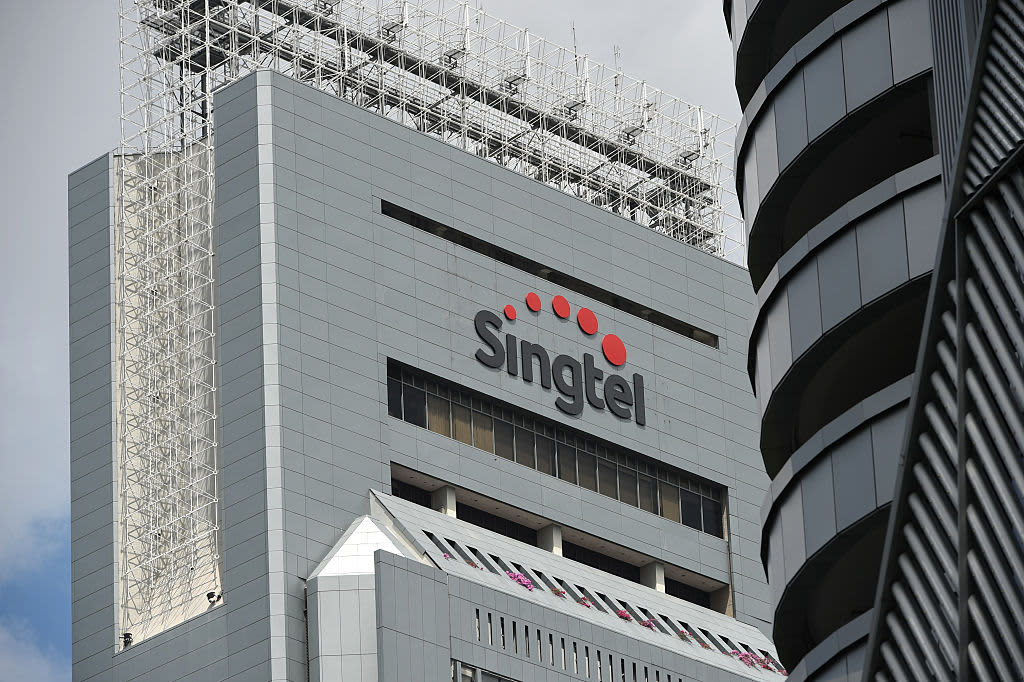
SINGAPORE — Singtel, as part of a consortium, has just obtained one of Singapore's first digital banking licenses — but the telecom company's entrance into the sector is not aimed at bringing down established banks, an executive told CNBC on Monday.
The company, which is Singapore's largest telco, applied for the license with ride-hailing and payments firm Grab. The consortium became one of four successful applicants, and its license will allow it to take deposits and offer banking services to retail and corporate customers, financial regulator Monetary Authority of Singapore announced on Friday.
Singtel's headquarters in Singapore.
Roslan Rahman | AFP | Getty Images
"We're coming in not like your typical fintech start-up trying to bring down the, you know, incumbent banks," Arthur Lang, chief executive of Singtel's international business, told CNBC's "Squawk Box Asia" on Monday.
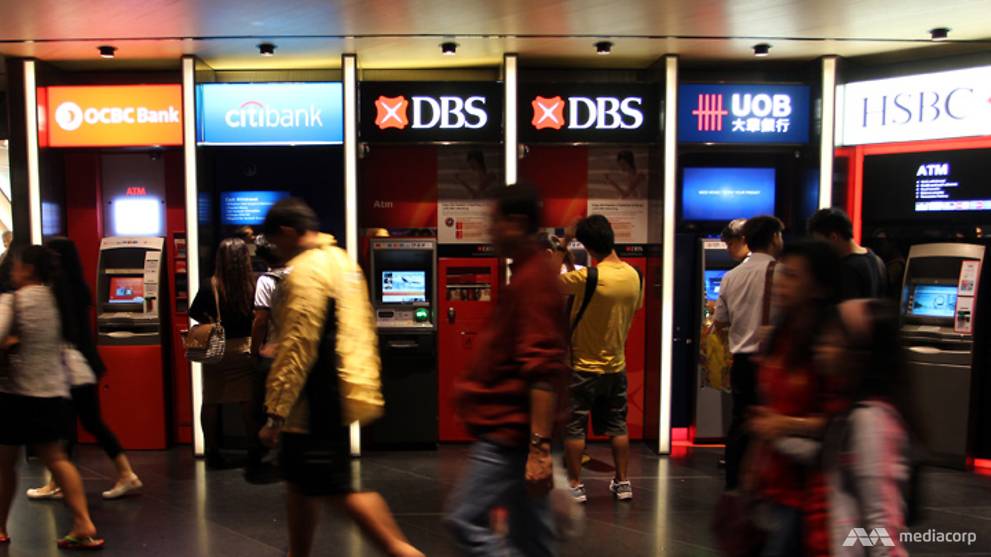
Singtel's stock jumped by around 5.6% on Monday morning, while shares of all three Singapore-listed banks declined. United Overseas Bank — the smallest of the trio — fell by 1.5%, while DBS Group Holdings and Oversea-Chinese Banking Corp dipped by around 1.3% and 1.1%, respectively.
Unlike in many markets, established banks in Singapore — a major Asian financial center — have "successful" digital businesses of their own, said Lang. That makes the banks "very strong and formidable" competitors to reckon with, he added.
However, the new entrant can offer "unmet" banking needs in Singapore and the region, said Lang. He explained that lockdown measures as a result of the Covid pandemic has shifted many activities online, and people now realize it's much more convenient to make banking transactions digitally.
We're coming in not like your typical fintech start-up trying to bring down the, you know, incumbent banks.
Arthur Lang
Singtel CEO, International
Singapore's regulator said it expects the new digital banks to start operations from early 2022. Lang said the Singtel-Grab consortium aims to fill around 200 roles by end-2021.
'Limited' threat to banks
The new entrants should pose "limited" threat to the traditional banks, said Krishna Guha, an equity analyst from investment bank Jefferies. Guha said in a Monday note that he's maintaining his positive view for the Singapore banking sector, with "buy" ratings for OCBC and UOB, and a "hold" rating for DBS.
Piyush Gupta, chief executive of DBS, said the bank — the largest in Singapore and Southeast Asia by assets — is "in a position to hold our own."
"The Singapore banks have been down the digital path now for several years, and I like to believe that we have one of the best digitally banked markets in the world," he told CNBC's "Squawk Box Asia" on Monday.
"There's almost no segments in the market which are underbanked or that we don't touch," he said, adding that DBS has managed to reach "niche spots" such as the older Singaporean population and micro-businesses, even through the pandemic.
Still, Gupta said he's always "wary" of competition and will watch with "a careful eye" for what the new entrants will bring to the industry.
Article From & Read More ( Singapore's digital bank license winner says it's not trying to bring down established banks - CNBC )
https://ift.tt/33KGm2P
Business
SINGAPORE - Singapore's biggest fintech festival and innovation week kicks off on Monday (Dec 7) with a star-line up of speakers, including Microsoft co-founder Bill Gates, Google chief executive Sundar Pichai and New Zealand Prime Minister Jacinda Ardern.
Deputy Prime Minister Heng Swee Keat, who is also Coordinating Minister for Economic Policies and Minister for Finance, will open the Singapore FinTech Festival and Singapore Week of Innovation and Technology (SFF x Switch 2020) by speaking on the state of the economy.
Owing to the Covid-19 pandemic, this year's festival will largely be held online from Monday till Friday.
Events will happen round the clock and participants can visit technology exhibitions, attend masterclasses by fintech and deep tech experts, as well as network with private equity and investment firms from around the world, said a joint statement from organisers Monetary Authority of Singapore (MAS) and Enterprise Singapore.
There will also be live sessions with climate scientists in the polar regions, the Amazon forest and the Himalayas.
About 1,400 speakers are slated to speak, among them finance and technology leaders, entrepreneurs and policymakers, including
Facebook co-founder Eduardo Saverin, the International Monetary Fund managing director Kristalina Georgieva and Microsoft chief executive Satya Nadella.
In addition to the online sessions, there will be satellite events held in cities around the world from Kampala in Uganda to New York and Shenzhen, where people will be able to visit technology showcases, among other things.
[[nid:498138]]
In all, the festival will feature more than 600 sessions, 1,000 exhibitors, and 27 international pavilions.
The organisers said more than 60,000 participants from over 7,000 companies across 130 countries are expected.
MAS chief fintech officer Sopnendu Mohanty said: "We are proud to have built an online event platform that continues to serve as a meeting point for the global fintech community and a hive for business activity when the industry needs it the most."
Enterprise Singapore assistant chief executive for innovation and enterprise Edwin Chow said: "Despite the pandemic, we are confident this event will connect and catalyse new partnerships between innovation enablers, enterprises and start-ups from Singapore and the rest of the world."
This article was first published inThe Straits Times. Permission required for reproduction.
SINGAPORE: For those with multiple bank accounts, logging on to numerous platforms for updates and drawing up financial spreadsheets can now be a thing of the past.
This is made possible with the launch of the Singapore Financial Data Exchange (SGFinDex) on Monday (Dec 7), a digital infrastructure that rides on the national digital identity system SingPass.
By providing explicit consent, users can now choose to pool all of their financial data – account balances, credit cards, loans and investments – from several banks and government agencies, and view them on a platform of their choice.
SGFinDex is a joint initiative by the Monetary Authority of Singapore (MAS) and the Smart Nation and Digital Government Group (SNDGG) in collaboration with the financial sector.
Making the announcement at this year’s Singapore FinTech Festival and the Singapore Week of Innovation and Technology, Deputy Prime Minister Heng Swee Keat said: “This is the world’s first public digital infrastructure that allows a person to sign in using his national digital identity and provide consent to obtain his financial information from different financial institutions and government agencies.”
For now, there are seven participating banks – Citibank, POSB and DBS Bank, HSBC, Maybank, OCBC, Standard Chartered Bank and UOB.
Users will also be able to retrieve data from three government agencies – the Central Provident Fund (CPF), Housing Board and the Inland Revenue Authority of Singapore (IRAS) – via MyInfo, the Government’s one-stop data platform.
Information on insurance policies and stock holdings at the Central Depository will be included in the next phase of SGFinDex, although a timeline for this was not given in the joint press release issued by MAS, SNDGG and the Association of Banks in Singapore on Monday.
HOW IT WORKS
Users can opt to view their consolidated financial information on any of the seven banks’ financial planning websites or mobile applications.
Those who are not customers of the seven participating banks can use the Government’s new digital financial planning service MyMoneySense.
According to a list of frequently asked questions (FAQ) about the SGFinDex, information from MyInfo will “always be retrieved” when users make a request to retrieve their banking data from any of the participating banks.
“This is to provide you with a consolidated overview of your personal financial health,” the list added.
If users do not want to share their MyInfo data with their bank, he or she can use the MyMoneySense website instead, according to the FAQ.
Both options will require users to login via SingPass as a form of identity authentication.
After they are logged in, users will be directed to the SGFinDex page where they can select the banks they wish to give consent to release their data. Upon selection, they will be directed to the banks’ respective portals for a second round of authentication.
Once successful, the banks will be displayed on the SGFinDex page as a connected financial institution.
Users will then be taken back to their preferred platform – be it a bank’s app or website, or the Government’s MyMoneySense – where they will be able to view the following:
From banks that have been given consent to release data:
- Current and savings accounts, fixed deposits and joint accounts (Month-end account balance for the last four months)
- Credit cards (Statement balance for the last four months)
- Secured and unsecured loans (Previous month’s statement balance)
- Unit trusts (Previous month’s account balance)
From government agencies:
- Latest available balances across all CPF accounts (For Singaporeans and PRs only)
- Latest outstanding HDB loan balance or monthly loan instalment
- Latest yearly assessable income from IRAS Notice of Assessment
A user’s consent will last for one year from the time it is first provided, and can be revoked any time.
SECURITY SAFEGUARDS
The SGFinDex is designed to ensure data protection and privacy of personal financial information, said the joint press release.
Safeguards include how data can only be retrieved with “explicit consent of the individual” whose identity must be verified through SingPass.
SGFinDex only transmits personal financial data, and does not store any of it. It cannot be used to perform transactions.
All data transmitted is encrypted and can be read only on the financial planning applications or websites that a user has chosen to authorise to receive the data, the joint press release said.
The FAQ stated that in the event of a data breach, circumstances leading to the incident will decide who is held accountable.
For instance, a participating bank will be held responsible if it is determined to have caused the data breach.
Under the Personal Data Protection Act, an organisation that is in breach of any data protection provisions may be liable to a penalty of up to S$1 million.
If the data breach had occurred at the Ministry of Manpower’s MyMoneySense platform or at the SGFinDex infrastructure, the Government will be responsible and will perform the necessary incident containment, forensic investigations and recovery actions in line with established protocols.
Under the Public Sector (Governance) Act, public officers who recklessly or intentionally disclose data without authorisation or misuse the data for a gain may be found guilty and be subject to a penalty of S$5,000 or imprisonment of up to 2 years, or both.
WHAT IT MEANS FOR YOU
Convenience aside, the SGFinDex will help Singaporeans in financial planning, the authorities said.
“Today, our personal financial information is fragmented across multiple entities, and we often take financial decisions, like making an investment or buying a house, without a holistic view of our financial situation,” said MAS chief Ravi Menon.
SGFinDex harnesses digital technology to enhance the financial well-being of Singaporeans, he added.
“(It) empowers the individual to consolidate his financial information for a comprehensive view of his portfolio, and use digital tools like MyMoneySense to make better financial decisions.”
Several participating banks have already tapped on SGFinDex to offer enhanced financial planning services to their customers, such as applications that cover money management, investments, protection needs and retirement planning, said the joint press release.
For instance, Maybank has launched MView – a new service that presents its customers with a comprehensive view of their financial status, including their life insurance policies with its insurance arm Etiqa.
OCBC also has a new digital financial dashboard called OCBC Financial OneView.
Apart from allowing customers to view all of their financial data at a glance, the artificial intelligence-powered dashboard will offer tools and personalised tips to help users manage their finances, plan for retirement, grow and protect their wealth.
In OBCB's recent Financial Wellness Index, more than one-third of respondents said they did not know the best way to grow their wealth.
“SGFinDex will open up more opportunities that allow customers access to simpler and more comprehensive financial guidance towards their goals,” said head of consumer financial services in Singapore Sunny Quek.
Singapore’s largest lender DBS said the launch of SGFinDex is “timely” as the COVID-19 pandemic and its sudden disruption of incomes have “revealed an acute need for financial planning” among many Singaporeans.
The bank’s five million customers can now access SGFinDex through its digital advisory tool NAV Planner “to consolidate their financial data and be served personalised insights and actionable recommendations on how to grow their money”, said its Singapore country head Shee Tse Koon.
Article From & Read More ( Under one roof: Users able to view financial data from bank, government accounts on single platform - CNA )
https://ift.tt/37z5hY0
Business
Article From & Read More ( SIA ready for 'most important logistical challenge in history' — transporting Covid-19 vaccines - TODAYonline )
https://ift.tt/33RF4mB
Business
LONDON (AFP, BLOOMBERG) - Britain’s Queen Elizabeth II will receive the Pfizer-BioNTech coronavirus vaccine within weeks, after UK regulators granted emergency approval and the world’s first roll-out begins next week, reports late Saturday (Dec 5) said.
The monarch, 94, and her 99-year-old husband Prince Philip are in line to get the jab early due to their age and will not receive preferential treatment, the Mail on Sunday reported.
The newspaper said Britain’s most senior royals would reveal they have been given the inoculation “to encourage more people to take up the vital jab”, amid fears so-called anti-vaxxers could dent enthusiasm for it.
Britain is gearing up to deploy its first Covid-19 vaccine with plans to provide the shot at more than 1,000 centres across the country over the coming weeks with the first jab expected to be given on Tuesday (Dec 8).
The vaccine, created by Pfizer Inc. and BioNTech SE, has arrived at secure locations in the UK from Belgium, the Department of Health and Social Care said Sunday. Following quality checks to ensure the jabs have been kept at the correct temperature, the shots will be made available to 50 hospital hubs around the country, before being distributed to doctor-run vaccination centres that will administer the jabs.
Britain will become the first western country to deploy a Covid-19 vaccine after regulators approved the Pfizer-BioNTech shot on Wednesday. The government has bought 40 million doses from the companies, enough to inoculate 20 million people on the two-dose regimen. The shots will be given in order of priority, with the first vaccines going to those in care homes, including workers, and people over 80 years old.
Vaccines are planned to arrive at hospitals Monday with the first vaccinations starting Tuesday, according to a separate release from NHS England, with patients aged 80 and over who are already in hospital or attending appointments there among the first to receive the jab, the NHS said. Any appointments not used for the first priority groups will be given to healthcare workers at high-risk of serious illness from Covid-19.
"This coming week will be an historic moment as we begin vaccination against Covid-19," Matt Hancock, the UK's health secretary, said in a statement. "We are doing everything we can to make sure we can overcome significant challenges to vaccinate care home residents."
One of the major challenges over the coming weeks will be to ensure the vaccine is kept at the right temperature. The shot must be stored at about minus 70 deg C and can only be moved four times within that cold chain before being used, according to NHS England. Once defrosted, the shot has a lifespan of days. Each box of vaccines, containing five packs of 975 doses, must be unpacked manually and the temperature downloaded to check it hasn't changed in transit.
When more of the vaccine becomes available, smaller sites like local pharmacies will also be involved in administering the jabs, the government said.
KUALA LUMPUR: It has been months since Naeem Nassir was terminated from Oman Air in July, and the 30-year-old pilot still longs for the adrenaline rush and glamour of his previous work.
His job of two years was quite different from the traditional deskbound nine-to-five. The senior first officer counted frequent international travel, an above average income and an office above the clouds as some of its perks.
For now, taking to the skies is out of reach for Naeem and hundreds of his pilot and flight attendant colleagues in Malaysia who have been grounded or sacked as COVID-19 pandemic has decimated the air travel industry.
The tail of a Malaysia Airlines aircraft is pictured on the tarmac at Kuala Lumpur International Airport in Sepang on Sep 7, 2020. (Photo: AFP/Mohd Rasfan)
Over the last few months, two major airlines in Malaysia, Malindo Air and AirAsia, have confirmed that there have been layoffs while national carrier Malaysia Airlines has implemented cost-cutting measures such as unpaid leave and pay cuts.
Some of those impacted have turned to entrepreneurship to earn a living, kick-starting businesses in the hope that they yield returns.
FORMER PILOT’S BURGER VENTURE WHICH HAS TAKEN OFF
Naeem, for instance, has swapped out his aviator hat and smart uniform for dirty aprons and grimy gloves at his new venture, Smashed Burger.
The outlet, located in Bukit Jelutong, Selangor, sells Australian beef patty burgers with toppings such as caramelised onions and beef bacon, for the relatively cheap price of around RM10 (US$2.46).
While flipping burgers may sound less complicated than flying a commercial aircraft, Naeem acknowledged that the transition has been “very drastic”.
“I went from sitting down in an air-conditioned cockpit, managing switches and flying the plane, and being served food by cabin crew, to working this burger business.
“I found myself standing for hours beside a hot grill late into the night and engaging directly with customers with different expectations. It’s a drastic change,” he added.
Naeem opened Smashed Burger because he was inspired by the burgers he had tried when he flew to Muscat, Oman.
A Smashed Burger contains smashed beef patty, special sauce, melted cheese, caramalised onions and lettuce. (Photo: Instagram/smashed.my)
“There were two kinds of burgers in Oman which I crave for. The first is like those at Shake Shack, so I went to Google their recipes. The second type is 'burger bakar' or burger patties grilled on charcoal grill.”
Fortunately for him, Smashed Burger has been a huge hit among locals in Selangor. Ever since food blogs and local media have reported on the venture, Naeem’s burgers have been selling out almost daily this week, and he has been forced to apologise to his customers, urging them not to travel to his stall and end up disappointed.
“We are thankful… we never expected the business to go viral. The business was initially run just by me and my wife, but now my parents are helping out too,” he added.
FORMER PILOT OPENS HOME-BASED FOOD BUSINESS
Another pilot who has pivoted to a food business is Syed Meerah, a former Malindo Air employee who was sacked in October.
The 33-year-old captain said he was shocked at first, but after discussing with his partner, he decided to take the plunge into a home-based food business.
“After I was retrenched, my girlfriend suggested that I do something that I like – and I love to cook. So I decided to cook for my friends, ask them to review, and after I got good feedback, I decided to go all out,” said Syed.
Syed Meerah runs Grounded Chef with his former colleague Hazrin Naemran. (Photo: Instagram/groundedchef)
Syed runs a food delivery service – dubbed Grounded Chef – that serves up mamak-style dishes that have a Peranakan twist such as devil curry chicken and chicken perattal. He works alongside his former colleague from Malindo Air, a flight attendant, who helps him with the deliveries.
“My cooking style was initially just Indian Muslim, mamak cooking. Then after I introduced Nyonya style, which is more sour-based with asam and belacan, that became my signature,” said Syed.
Grounded Chef serves, among others, devil's chicken curry and house special teh tarik. (Photo: Instagram/groundedchef)
“I used to travel to India a lot for work and over there I learnt about spices, local delicacies and style and I try to implement these in my cooking,” he added.
He cited how he learnt to make a special omelette by adding more milk to make it fluffier, a tip he picked up in Amritsar, a city in north India.
FLIGHT ATTENDANT STARTS FISH BREEDING VENTURE
Besides food businesses, there are grounded Malaysians from the aviation industry who have opened other ventures. For instance, a flight attendant with AirAsia, who wanted to be known only as Don, told CNA that he has opened a business breeding fighting fish.
Don said that he is still employed by AirAsia, but as the number of flights have dried up, his opportunities for work have dwindled and so has his flight allowance. He flies once a month, if he is lucky.
Don is breeding fighting fish in his home. They take around five months to mature before they can be sold. (Photo courtesy of Don)
“The last time I flew was around two months ago, and frankly, I don’t know if I’ll ever fly again,” said Don.
He recalled how earlier this year, he and his AirAsia colleagues had heard rumours of upcoming retrenchment exercises.
“Typically we hear that it would most likely happen within 24 hours, and those nights, we all had trouble sleeping.”
He then decided that he needed some financial security and invested his life savings of around RM17,000 to start a fish farm in his home to breed colourful betta fighting fish, which can be sold for up to RM1,000 each.
Don enjoys breeding fighting fish but he finds the work required to frequently clean their tanks cumbersome. (Photo courtesy of Don)
“I started out with just two fish, but now I’ve got thousands of them. I made mistakes, but learnt from watching YouTube videos and got suggestions from old-time breeders,” added Don.
To further supplement his income, Don also opened a roadside stall called Popiah World selling fried popiah. He said the stall’s unique selling point is the variety of fillings customers can choose to have in their popiah, including carbonara, spicy beef and chicken with special sauce.
However, he has learnt that running two businesses is “tiring”, especially the fish business, which has taken up a lot of his time and energy.
“Breeding fishes is not my specialty. I love animals, so I enjoy it but it’s exhausting to change the water in the containers every 3 days and I have no money to hire an assistant. It also takes five months to breed the fishes until they’re mature and ready to be sold. This requires patience before I would see any returns on my investment,” added Don.
“THE HIGHER YOU ARE, THE HARDER YOU FALL”
While Naeem, Syed and Don’s businesses have had varying degrees of success so far, all three are in agreement that the income they are grinding out pales in comparison with what they were earning while flying pre-COVID-19.
Naeem said that as a pilot with Oman Air, he was earning a “five-figure salary” and although his Smashed Burger venture has been popular, he still has been forced to tone down his lifestyle.
“I was blessed with a good salary. I bought a house. I now own two properties and my (loan) commitments are very, very high,” said Naeem. “It’s been a big change.”
Syed concurred, explaining how his spending power has diminished now that he is relying on his home-based business for income.
“As the saying goes – the higher you are, the harder you fall,” said Syed. “This whole episode has been a wake-up call for all of us,” he said. “At the moment, it’s about getting through the day.”
He was grateful that the government has extended the bank loan moratorium for Malaysians who have been retrenched as a result of COVID-19.
“It helps a lot but when the moratorium ends, the problem arises again. These current businesses opened by pilots and flight attendants won’t be able to sustain unless the moratorium is extended further,” said Syed.
“We have car and house loans which need to be serviced as well and we would appreciate more help from the government. Other than the moratorium, there has been no other forms of financial aid,” he added.
Meanwhile for Don, he still draws a basic salary as he is still employed with AirAsia, but it is a fraction of what he was earning in 2019 when he was flying more often.
“My wife’s income has been reduced by 30 per cent. The banks have approved our moratorium request for our home loan, but not for my car and motorbike,” said Don.
“So there’s nothing else I can do but try my best to cover the costs,” he added.
WAITING TO FLY AGAIN
While their businesses have been a refreshing change, all three told CNA they are keen to return to work with their airlines.
Syed said: “I’m waiting to get back in the air, that’s about it. This (business) is something to tide me over.”
However, he acknowledged if he were to return to flying full time, he would miss his “fun cooking business” and the conversations he has with his customers.
“The only (main difference) is the money, always the money,” said Syed. “I can’t earn whatever I earned flying from my business, and I have (financial) commitments.”
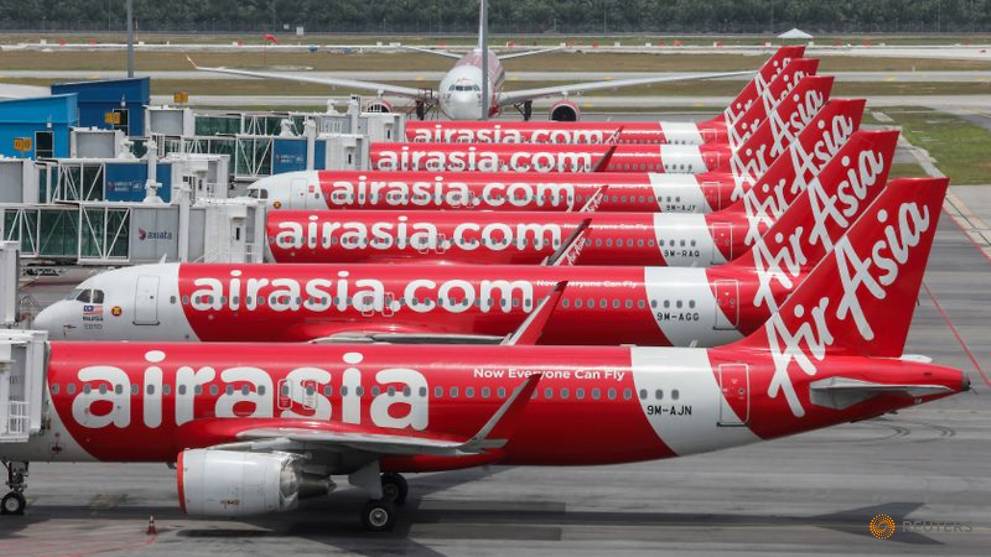
AirAsia planes are seen parked at Kuala Lumpur International Airport 2 in Sepang, Malaysia, Apr 14, 2020. (File photo: REUTERS/Lim Huey Teng)
Naeem said that it has always been his ambition to both be a pilot and also own a food and beverage business, and he is hopeful that he can follow both dreams once the flying industry has returned to normal.
“Perhaps it has been a blessing in disguise that I got laid off, so that I can chase this dream,” said Naeem.
“If I were to start flying again, I would love to continue this business because I believe in sharing good quality food for everyone to enjoy. Hopefully this business can grow further again,” he added.
Don, the flight attendant, is hopeful that the air travel industry will soar again in the near future. He noted that there are plans to bring in the COVID-19 vaccine and he is optimistic it will inspire confidence in Malaysians to resume flying.
“I hope AirAsia will recover and passengers will no longer be afraid to travel. If I’m working, at least I’m assured of a salary,” said Don.
“I don’t mind flying even with the precautions in place. I wear the PPE (personal protective equipment) while flying and ensure I take a shower at the airport after every flight,” he added.
Article From & Read More ( 'Don't know if I'll ever fly again': Pilots, aircrew in Malaysia turn entrepreneurs to tide over COVID-19 - CNA )
https://ift.tt/3lLn1Vn
Business
SINGAPORE - Southeast Asian ride-hailing firm Grab’s venture with Singtel and internet platform company Sea Ltd have each won licences to run Singapore’s first digital banks, in the city-state’s biggest banking shakeup in two decades.
Singapore’s move to herald newer players including Alibaba Group affiliate Ant Group and a consortium comprising China’s Greenland Financial Holding Group comes as Asian regulators tap tech firms to shake up their often staid markets.
Singapore’s criteria, which included local control and S$1.5 billion in paid-up capital for full digital banking, was stricter than its main financial rival Hong Kong, which has issued eight digital licences.
“Digital banks will need to contend with an uncertain economic environment, low interest rates and competitive responses from the incumbent banks and other financial services players,” said Wong Nai Seng, a partner at Deloitte, who worked at Singapore’s central bank for 17 years.
The Monetary Authority of Singapore (MAS) expects the digital banks to start operating from early 2022 after meeting the necessary pre-conditions of Singapore, one of the world’s top financial centres, and Southeast’s main hub.
“We expect them to thrive alongside the incumbent banks and raise the industry’s bar in delivering quality financial services, particularly for currently underserved businesses and individuals,” said Ravi Menon, managing director of the Monetary Authority of Singapore (MAS).
MAS, the central bank, had previously shortlisted 14 of 21 applications received by Dec. 31 last year.
Analysts say the development is unlikely to seriously impact incumbents DBS Group Holdings, Oversea-Chinese Banking Corp and United Overseas Bank which have already invested heavily in technology.
The licensees could use the opportunity as a step towards expanding into larger Southeast Asian markets.
SOUTHEAST ASIAN TECH TITANS
Grab’s venture and Sea won digital full bank licences. This allows them to take deposits and offer services to both retail and corporate customers in a country where most of its 5.7 million population already have bank accounts.
Their operations will initially be restricted as they build up business models and processes before gradually becoming fully functional.
Grab, Southeast Asia’s most valued start-up at over $15 billion which is backed by Softbank Group Corp, will hold 60per cent in its venture with Singtel. Grab has evolved from a food delivery app operator into a one-stop shop for ride-hailing, food delivery, payments and insurance.
At a virtual media briefing on Friday, both firms said the consortium would add about 200 roles by end-2021.
“Singapore is a gateway to Southeast Asia. Today’s winners will also look to seek upcoming digital bank licenses in Malaysia and Philippines to create regional powerhouses for bringing fintech and lifestyle together,” said Varun Mittal, head of emerging markets fintech business at consultancy EY.
Shares of U.S.-listed Sea, which is involved in e-commerce, online gaming and digital payments, rose 5.6per cent on Friday. Founded in 2009 by Chinese-born entrepreneur Forrest Li, who became a Singapore citizen, Sea boasts a market valuation of $90 billion.
Li, Sea’s chairman and group CEO said the licence gave the firm a chance to address the “underserved” financial needs of young consumers and small and medium businesses in Singapore.
Ant and the Greenland consortium, winners of digital wholesale banking licences, can tap small and medium-sized businesses. Alibaba’s shares edged up 0.6per cent.
MAS said since the two wholesale banks are introduced as a pilot, it could give more licences later. Previously, it had flagged offering up to three wholesale licences.
It said on Friday that it had taken into account the impact of the Covid-19 pandemic on the applicants’ business plans.
The national carrier on Saturday (Dec 5) said it is working with vaccine manufacturers and regulators to increase the amount of dry ice that can be carried safely on its planes from 3,500kg per cargo flight now.
Please subscribe or log in to continue reading the full article.
Get unlimited access to all stories at $0.99/month
Latest headlines and exclusive stories
In-depth analyses and award-winning multimedia content
Get access to all with our no-contract promotional package at only $0.99/month for the first 3 months*
Article From & Read More ( SIA, other firms look to build on existing vaccine handling capabilities - The Straits Times )
https://ift.tt/2JX3RPe
Business
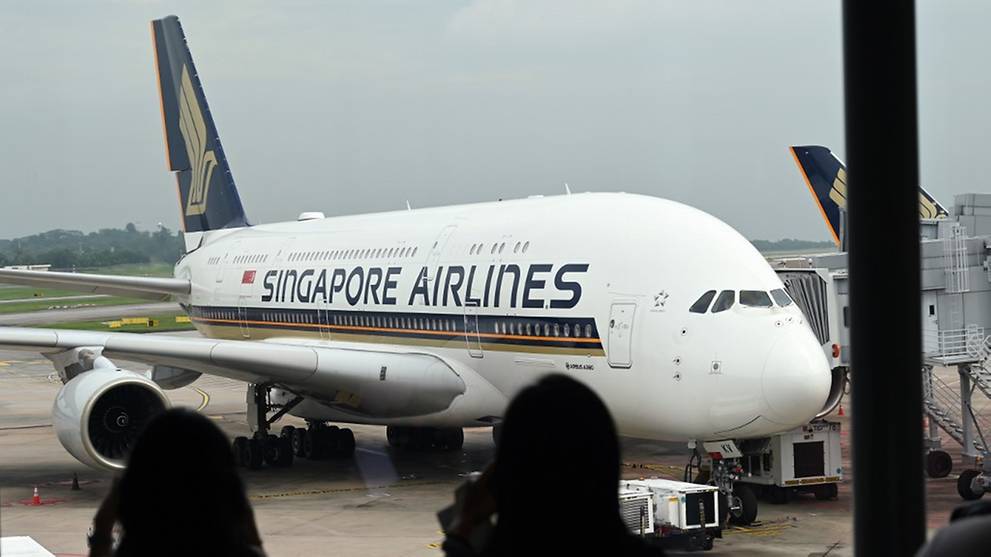
SINGAPORE: Singapore Airlines (SIA) will prioritise cargo capacity to transport COVID-19 vaccines when they become available, said the national carrier on Saturday (Dec 5).
It will prepare seven Boeing 47-400 freighters for such operations, SIA said in a media release, adding that passenger planes will also be deployed where needed.
"SIA will make available cargo space on its flights and accord uplift priority to COVID-19 vaccine shipments across the key vaccine trade lanes," said the airline.
To ensure that it is ready to transport the COVID-19 vaccines, SIA said it has been "actively engaging" with various stakeholders across the supply chain and in pharmaceutical export markets over the last few months.
SIA has signed master leasing agreements with key cold chain container providers to ensure that the airline has access to sufficient temperature-controlled containers to handle large volumes of vaccines.
Tracking devices have also been certified for use, the airline added, providing vaccine producers and their logistics service providers with "complete end-to-end visibility and tracking of the shipments (particularly temperature readings) throughout the journey".
Moderna’s COVID vaccine, for instance, needs to be transported and stored at -20 degrees Celcius. The Pfizer/BioNTech vaccine must be kept at -70 degrees Celcius and can be kept in a regular fridge for just five days.
The airline noted that in the last financial year, SIA Cargo carried about 22,000 tonnes of pharmaceutical shipments across its network.
"Singapore's geographical location, coupled with SIA's extensive network connectivity and the strong pharmaceutical handling capabilities at Singapore Changi Airport, positions it well as a key transit hub for the transportation and distribution of pharmaceuticals," it added.
Mr Chin Yau Seng, Senior Vice President Cargo of Singapore Airlines described the transportation and distribution of COVID-19 vaccines as "one of the biggest and most important supply chain challenges of our generation".
"SIA has a well-established track record of safely and reliably transporting critical pharmaceutical shipments," he added.
Article From & Read More ( Singapore Airlines to prioritise cargo capacity for transportation of COVID-19 vaccines - CNA )
https://ift.tt/3mO6Ure
Business
SINGAPORE - The Singapore Tourism Board (STB) has ordered shoe retailer Foot Locker to suspend operations for 10 days from Saturday (Dec 5) at its Orchard Gateway @ Emerald outlet for failing to comply with Covid-19 safe management measures.
“Large crowds had gathered at the outlet for a product launch on Friday, despite repeated advisories by public enforcement agencies on crowd management,” said STB in a joint statement with Enterprise Singapore on Saturday.
During the period of its suspension, Foot Locker’s Orchard outlet is not permitted to conduct physical retail activities, but may continue to carry out online retail activities.
Investigations are still ongoing and further enforcement action may be taken, the agencies said.
STB and ESG are also engaging Foot Locker on the measures it will take for future product launches, including the potential cessation of all such physical launches at Foot Locker locations across Singapore.
They added that retail businesses are strongly advised to hold online sales instead of organising physical product launches that may attract large crowds.
“If physical launches are held, businesses must ensure they have robust plans for safe management measures in place, including crowd management and capacity limits,” the agencies said.
A Foot Locker spokesman told The Straits Times on Saturday that it will not be hosting any in-store events this weekend.
"We take the issues of crowding seriously and are continuing to work diligently and proactively to maintain safe distance for all of our shoppers and staff members.
"We will continue to enforce restrictions on maximum occupancy for all of our stores according to the guidelines set forth by local authorities," said the spokesman.
When ST visited the footwear store at around 10am on Saturday, there were no crowds.
Security officers were seen advising some members of the public waiting outside the store that the sneaker launch had been cancelled.
There were no crowds at the footwear store at around 10am on Dec 5, 2020. ST PHOTO: KELVIN CHNG Security officers were seen advising some members of the public waiting outside the store on Dec 5 that the sneaker launch had been cancelled. ST PHOTO: KELVIN CHNG
On Friday, photos circulated on social media showed a crowd of around 100 people packed shoulder to shoulder outside the footwear store at about 8pm.
The crowds dispersed shortly after 8.30pm after safe distancing ambassadors and police officers arrived.
Adidas' Yeezy sneaker line, the product of a collaboration between rapper Kanye West and the sports shoe brand, drew large crowds in Singapore and abroad during past launches.
Adidas Singapore had held an online ballot for Saturday's limited release, but many sneaker aficionados who missed out appeared to have wanted to try their luck at Foot Locker, given the high resale value of the shoes.
Last June, the launch of the limited-edition Adidas Yeezy Boost 350 V created a long queue lasting many hours before the release at Foot Locker's Jewel Changi Airport outlet.
Article From & Read More ( Foot Locker temporarily closes Orchard outlet, no in-store events this weekend - The Straits Times )
https://ift.tt/3mJb9Ve
Business
Article From & Read More ( Probe under way after crowds gather outside Foot Locker at Orchard Gateway: STB - TODAYonline )
https://ift.tt/3ooNh9z
Business
The chicken bites by Californian start-up Eat Just are made by culturing animal cells in bioreactors instead of rearing animals on farms, and are not yet available for sale and consumption anywhere else.
The Singapore Food Agency (SFA) said it was allowing the cultured chicken to be sold here after its evaluations determined it to be safe.
The company would not be drawn on a timeline on when the product will be available, but the firm's chief executive Josh Tetrick told The Straits Times on Thursday that it will be soon, and at a "higher-end" restaurant.
The aim is to make cultured meat cheaper than conventionally farmed meat, he added.
Why it matters
Alternative proteins, such as cultured meat, could pave the way for more sustainable food production and better food security.
While a report on land use by the UN's climate science body last year found that plant-based diets were still associated with a lower environmental impact compared with meat-based ones, it may not be feasible to get everyone to go vegetarian.
Culturing meat could be an alternative to rearing livestock, which according to the UN's Food and Agricultural Organisation make up 14.5 percent of emissions from human activity.
Culturing meat involves taking cells from an animal (often done in a harmless way, such as through a biopsy), and then growing the cells in a nutrient broth within a bioreactor.
This process has been associated with a number of environmental benefits.
One, it reduces emissions associated with rearing livestock.
There is less need to clear forests for farms or grow crops for animal feed, and reduces methane emissions from ruminants like cows, which releases a lot of methane during digestion of their food. Methane is considered a more potent greenhouse gas than carbon dioxide over shorter time spans.
Two, culturing meat can be done in a smaller land area compared with the livestock supply chain.
Three, it allows meat to be produced without slaughter. This avoids the need to confine livestock to small spaces, and reduces the chance of diseases spreading between humans and animals.
On the food security front, cultured meat could also boost the resilience of import-dependent nations like Singapore, which sources more than 90 per cent of its food from overseas.
Eat Just has said its cultured chicken bites will be manufactured in Singapore, and Mr Tetrick told ST on Thursday that the firm aims to produce enough not just for the domestic market, but for the rest of Asia as well.
What lies ahead
The need to feed a growing global population, which could reach almost 10 billion by mid-century, is straining food production systems.
And the impacts of climate change - whether changing rainfall patterns or more frequent extreme weather events - could put further stress on food security.
These trends highlight the need for new ways of producing food, with a smaller carbon footprint.
Critics have said the environmental impact of culturing meat - an energy-intensive process - is not definitively better than rearing animals the traditional way.
Context is important. In Singapore, for instance, most energy is generated by natural gas - a cleaner fossil fuel than coal or oil. Advancements made in renewable energy systems, and scaling up production of cultured meat, could boost efficiency and lower the carbon footprint of cultured meat.
As with many new innovations, more studies are needed to assess the different impacts of cultured meat products.
The SFA has done so on the food safety front. But even as research on environmental impact continues, another hurdle remains: Consumer receptivity to eating meat made a different way.
The impact of climate change can already be felt. Consumers can help, by keeping an open mind.
SINGAPORE - Former Big Box shopping mall in Jurong East has been acquired by Perennial Real Estate Holdings for $118 million, said the developer on Friday (Dec 4).
Over $70 million is expected to be invested to redevelop the site into a business park, said the company, which has obtained JTC Corporation's confirmation for the zoning of the site to be changed.
The property is located in the Jurong Lake District, which is slated to become Singapore's largest commercial and regional centre outside the city centre.
Redevelopment will be completed progressively from the fourth quarter next year, with the property being renamed Perennial Business City.
With a land area of about 606,600 sq ft, the former mall's spaces are predominantly designed for warehousing and warehouse retail usage.
It is connected to surrounding buildings such as Jem and IMM, and to Jurong East MRT station via underground walkways. It is accessible via major expressways, including Ayer Rajah Expressway, Pan Island Expressway and the Tuas Second Link.
"The property is also directly linked... to Ng Teng Fong General Hospital and Jurong Community Hospital, which will complement its potential biomedical sciences and health tenants," Perennial said in a statement.
It plans to increase the property's gross floor area from 1.4 million sq ft to 1.5 million sq ft, and the net lettable area from 1 million sq ft to 1.1 million sq ft.
The new development will feature large floor plates, ample carpark spaces and a large rooftop garden with an amphitheatre.
Perennial will own a majority 51 per cent stake in the future business park. The remaining stake will be held by other investors such as HPRY Holding, which is the investment vehicle of Perennial director Kuok Khoon Hong.
The transaction is expected to complete by mid-February next year.
The developer has also appointed CBRE Singapore to kick-start marketing and leasing to potential tenants from industries such as infocomm technology, biomedical sciences and financial institutions.
Perennial chief executive officer Pua Seck Guan said that the acquisition was a "major mile stone" for expanding the company's real estate portfolio to include business parks.
"With its strategic location, excellent transport connectivity, close proximity to amenities, and innovative design to support urban sustainability and healthy well-being, Perennial Business City is well-poised to cater to local and regional businesses geared for the future economy," he added.
Article From & Read More ( Perennial acquires Big Box mall in Jurong for $118 million, will convert it into business park - The Straits Times )
https://ift.tt/37AyGRD
Business